Professor · KTH Royal Institute of Technology · Stockholm
Value creation, innovative business models, and non-traditional marketing.
Dr. Terrence E. Brown is Professor of Technology-Based Entrepreneurship at KTH and the founding editor-in-chief of the International Journal of Entrepreneurial Venturing. He studies how businesses create value as they start, grow and transform, including what AI changes for startups. Thirty years of teaching founders and two Ph.D.s: his first Ph.D. dissertation (1996) won the NFIB Dissertation Award from the Academy of Management as the best in entrepreneurship, and his second (2018) introduced the consumer digital twin.
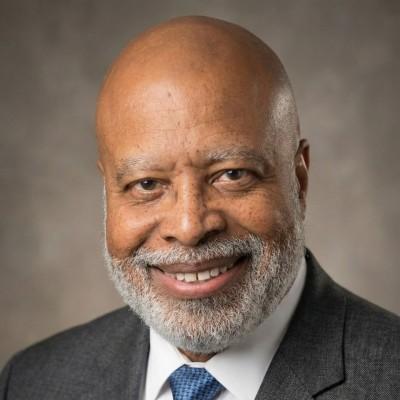
Terrence E. Brown, Ph.D.
Professor of Technology-Based Entrepreneurship, KTH Royal Institute of Technology
2
Ph.D.s
18
years as founding editor of a peer-reviewed journal
50+
peer-reviewed publications
30
years teaching on four continents
Appointments and degrees
KTH Royal Institute of TechnologyStockholm School of EntrepreneurshipThe Wharton SchoolRutgers UniversityLuleå University of TechnologyBrown University
What he talks about
His research, and what he comments on
01
Value creation: starting, growing and transforming businesses
How companies create value at each stage, from the first idea to growth to reinventing an established business.
Interview angles →
02
Startups and AI
What artificial intelligence changes about starting and scaling a company: who can start one, how fast, and what still decides who wins.
Interview angles →
03
Innovative business models
Why the business model, not the product, often decides who wins, and how AI is creating models that did not exist before.
Interview angles →
04
Non-traditional marketing
Marketing strategies and techniques outside the textbook, and the evidence for whether they work.
Interview angles →
05
Know, Like, Trust
Why trust, not reach, decides who customers buy from, the subject of his forthcoming book.
Interview angles →
Books
Practical books for founders and the people who back them
Coming soon
The ABCs of Entrepreneurship
An A to Z of short, practical entries on starting and growing a company, written for founders and for anyone thinking about becoming one. Read it in any order and come back when a new question comes up.
In progress
Know, Like, Trust
Why trust decides who customers buy from, how it is earned, and what changes when artificial intelligence can fake almost every signal people used to rely on.
Journalists and reviewers: request a review copy.
Writing
Recent notes
November 22, 2026
IKEA's business is built on low prices. Its sales still fell three years in a row.
Total IKEA retail sales, the combined sales of the 13 franchisee groups across products, food and services, were €43.8 billion in the year ended August 31, 2026. That's down from €44.6 billion and €45.1 billion in the two years before, per Inter IKEA, and Quartz calls it a third straight decline. Separately, Inter IKEA Group's own operating result fell about 15%, to roughly €1.5 billion. CEO Jakub Jankowski wrote that the model is low prices through low cost and high volumes, and that "sales have been stagnant for several years." IKEA's recent move is price cuts of up to 25% on a wide range of selected products in Europe, which Inter IKEA says it made together with its franchisees. It also notes that transport and raw material costs rose during the year, and it hasn't said how the cuts are funded. My bet: when you're already known as cheap, a price cut buys you little that's new, unless customers feel your prices crept up. They already believe you're cheap. They need a reason to come back. IKEA hasn't published results on the cuts, so this is a bet, not a verdict. A price cut is easy to announce and hard to reverse. Before you make one, find out whether price is why people stopped buying. If it is the reason, cut. If it isn't, you've handed margin to people who were already coming. Start with the customers who left. A handful of honest calls will tell you more than a spreadsheet, and it costs far less than a margin you can't win back. If you're already known as cheap and sales stall, do you cut again or fix something else? Pick one, and say what you'd fix.
Read on LinkedIn →
November 21, 2026
Artists shouldn't get a veto over AI remixes of songs they've already released. They should get paid.
Per the Financial Times, Spotify is weighing $4 to $5 a month for a tool that makes AI remixes and covers. It has signed licensing deals with Universal Music Group, Merlin and Believe, and is still negotiating with Sony and Warner. Spotify says artists would opt in, and heise reports that's the slow part, especially for major contemporary artists. Price and timing aren't confirmed. Music law gave up the cover-song veto in 1909, when Congress created the first compulsory license. Once a song is released, anyone in the US can record their own cover by paying a set royalty, and the songwriter can't say no. Congress wanted to stop one party from locking up who gets to record a song. That law covers the composition in audio-only covers. It doesn't cover an artist's recording or voice. I'm a professor, not a copyright lawyer, so I'm arguing a principle, not claiming the law already applies. I'm also talking about licensed remixes, not training AI on music without a deal. The hardest objection is voice. A cover is someone else's performance. An AI remix can sound like you. That's where artists have their best case, and where my argument is weakest. It's weak on money too. For covers, the law sets the rate. For AI remixes, no rate has been reported. If the royalty is a rounding error, my argument fails. And without an artist veto, whoever owns the masters may set the terms. So if you're an artist, your leverage isn't the veto. It's the rate and the terms. Should artists get a veto over AI remixes of released work, or only a royalty? Pick one.
Read on LinkedIn →
November 20, 2026
Half of Bath & Body Works' $0.62 earnings per share came from tariff refunds. Net sales fell 2.3%.
In August, the company reported adjusted earnings of $0.62 a share against a $0.24 analyst consensus. It said in its filing that about $80 million of tariff refunds were included. Without them, adjusted earnings would have been $0.31, still above the consensus but half the headline number. Net sales were $1,514 million, down from $1,549 million a year earlier. Operating income was $216 million, up from $157 million, but the release doesn't say which line the refunds sit in, so I can't read that number. Here's the question I'd ask about any good quarter. Which of these numbers moved because of something we did for a customer, and which moved because of something that happened to us? A refund doesn't repeat on a schedule. Traffic is what compounds. The company raised its full-year earnings outlook and narrowed its net sales guidance to a decline of 2.5% to 4%, but its adjusted EPS guidance of $2.60 to $2.80 is still below last year's $3.21. For the third quarter, it guided adjusted earnings to $0.07 to $0.12 a share against a $0.26 consensus. Shares fell in pre-market trading, per RTTNews. My read: the guidance says what the refund says, that the underlying business is softer than the headline. CEO Daniel Heaf pointed to declining store traffic as a persistent drag, per Quartz. Profit still matters. The company expects about $650 million in free cash flow this year. But a beat that includes a refund tells you about the refund, not about the customers. Would you rather report a profit beat that includes a refund, or a smaller profit with traffic growing? Pick one.
Read on LinkedIn →
For journalists, editors and podcast hosts
Expert comment on trust, entrepreneurship and AI, in English or Swedish.